Difference Between Short Kurta and Long Kurta – Which One to Buy

If you've ever stood in front of a wardrobe trying to decide between a short kurta and a long one, you already know the confusion isn't really about looks. Both look good. The real question is where you're wearing it and what you're pairing it with — and honestly, most men figure this out the hard way, showing up somewhere either overdressed or a little too casual for the room.
Let's clear that up properly.
What Actually Separates the Two
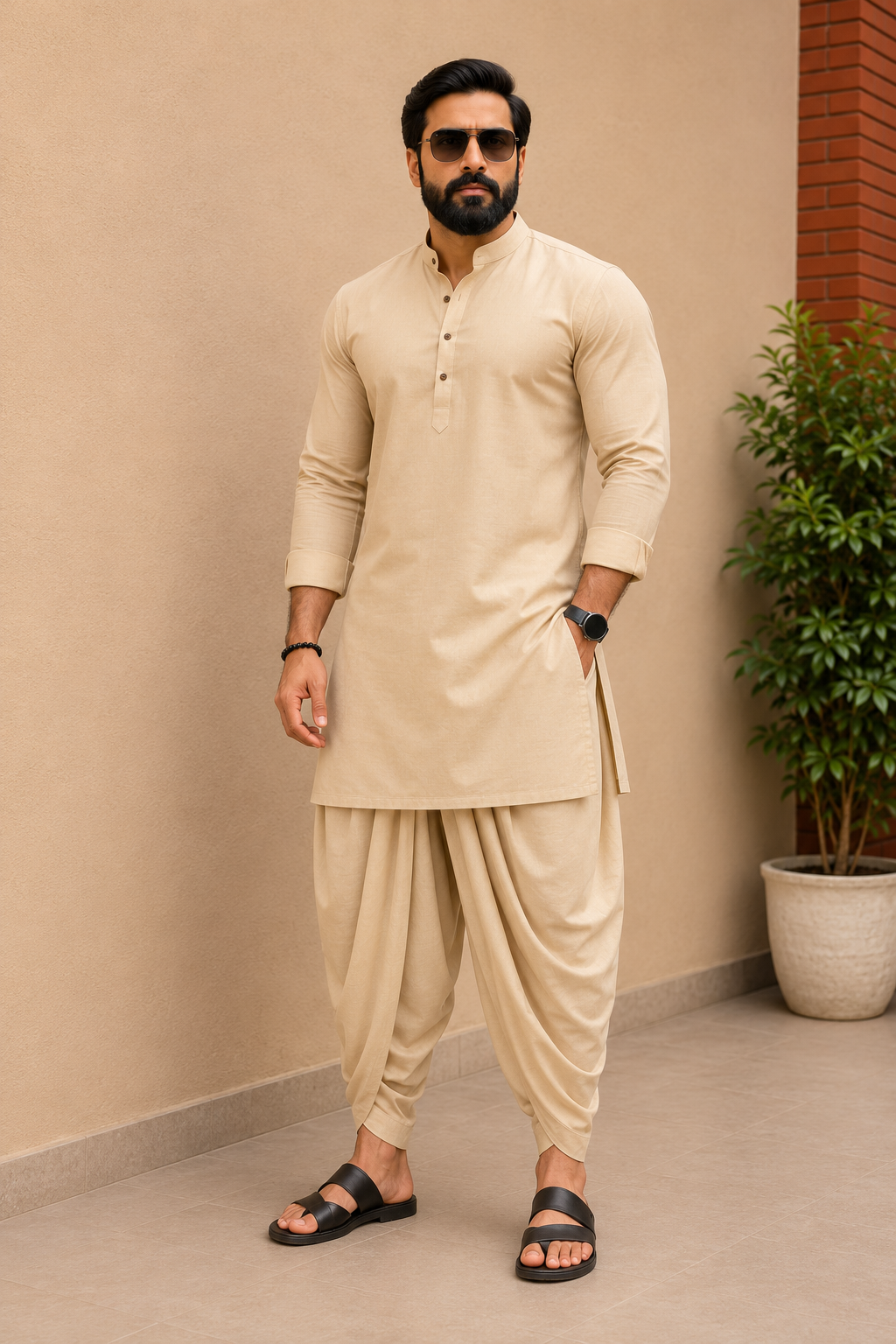
A short kurta typically ends somewhere around the hip, sometimes a little lower. Think of it as closer to a long shirt than a traditional robe. A long kurta, on the other hand, runs past the hip and usually sits somewhere between mid-thigh and knee-length — this is the one that gives you that classic, complete ethnic silhouette.
The length isn't just a style choice. It changes how the outfit reads. A short kurta feels more like everyday wear that happens to look traditional. A long kurta feels like an outfit — deliberate, occasion-ready, the kind of thing you wear when you actually want to look dressed up rather than just presentable.
Short Kurta: Built for Versatility
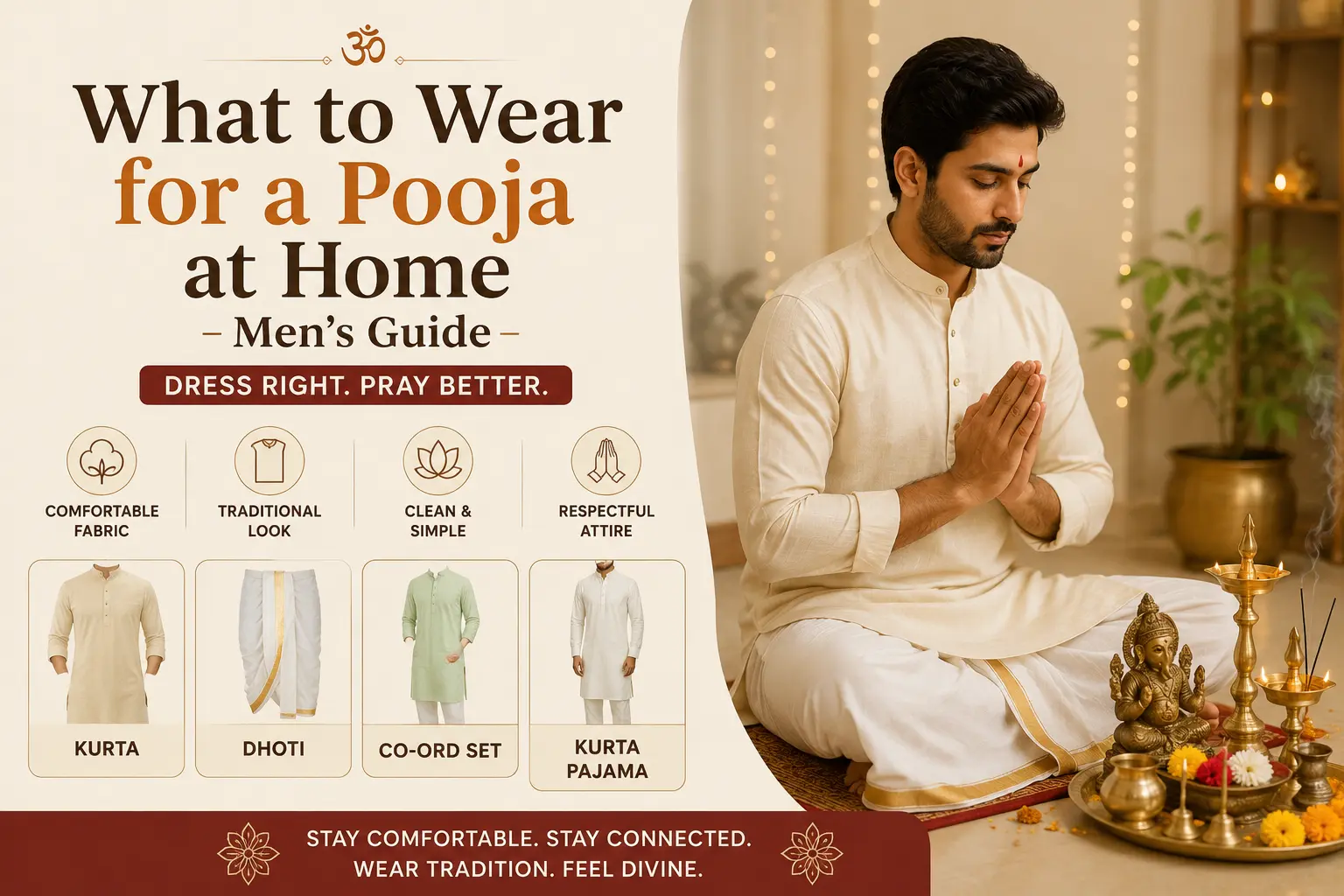
Here's the thing about a short kurta — it doesn't really commit to being "ethnic wear" the way a long one does. You can throw it on with jeans and it reads casual. Pair it with a dhoti or joggers and suddenly it's pooja-appropriate. That flexibility is the whole point.
Most short kurtas also come with a chest pocket, which sounds like a minor detail until you're actually wearing one and realize you have somewhere to keep your phone without needing a bag. Roll-up sleeves are common too, so you can dress it up with full sleeves or roll them for something more relaxed.
Where a short kurta really earns its place is in daily rotation. It's not precious. You're not worried about it being "too much" for a regular Sunday, and it still holds up fine if plans change and you end up somewhere slightly more formal by evening.
If your wardrobe needs one kurta that works across most situations without overthinking it, this is usually the safer pick.
Long Kurta: Built for the Occasion
A long kurta operates differently. It's not trying to be casual. The length itself signals that you've made an effort — this isn't something you'd wear running errands, and it wouldn't feel right to.
This is the piece that pairs naturally with a dhoti or a matching pyjama for weddings, festivals, or a big family pooja. The proportions are built around that combination — the length balances out visually with a flowing dhoti or a straight pyjama in a way a short kurta just can't replicate.
There's also something to be said about how a long kurta photographs. If you've noticed how certain outfits just look better in wedding photos or festival videos, length has a lot to do with it. A long kurta in a bold colour — yellow, magenta, deep maroon — carries visual weight that a shorter cut doesn't have room for.
The tradeoff is obvious: it's not an everyday piece. You're not wearing a knee-length yellow kurta to run to the store. It's built for moments, not routines.
So Which One Should You Actually Buy
If you're buying your first kurta and want something you'll actually wear often, go short. It adapts to more situations, it's easier to style with things you already own, and it won't sit unused in your wardrobe waiting for the "right occasion."
If you already have a couple of short kurtas and you're gearing up for a wedding season or you know you've got festivals coming up, a long kurta fills a gap the short ones can't. It's less about frequency and more about having the right piece ready when the occasion actually calls for it.
A lot of men end up owning both, and that's honestly the smart way to build this part of a wardrobe out. Short kurtas cover the day-to-day and the semi-casual functions. Long kurtas cover the moments where you want the outfit itself to make a statement.
A Quick Way to Decide
Ask yourself one question before buying: am I dressing for a day, or am I dressing for an event?
If it's a day — a regular outing, a casual family visit, a low-key pooja at home — the short kurta does the job without making you feel like you're in costume. If it's an event — a wedding, a major festival, something with a guest list and a dress code, even an unspoken one — the long kurta is what actually fits the moment.
Fabric matters here too, by the way. Both styles work well in soft cotton, but if you're leaning toward a long kurta for something like a wedding, it's worth checking whether the fabric holds its shape through a long day of standing, sitting, and moving around. A short kurta has more forgiveness built in simply because there's less fabric to manage.
The Practical Bottom Line
Neither style is objectively better — they're just built for different jobs. A short kurta is the one you'll wear the most, and a long kurta is the one people will remember you in. If you're building a wardrobe from scratch, start with a couple of short kurtas in versatile colours like black or brown, then add a long kurta in something bolder once you know you've got an occasion lined up for it.
The mistake most people make isn't picking the wrong style — it's buying one kurta and expecting it to do both jobs. It rarely does.